

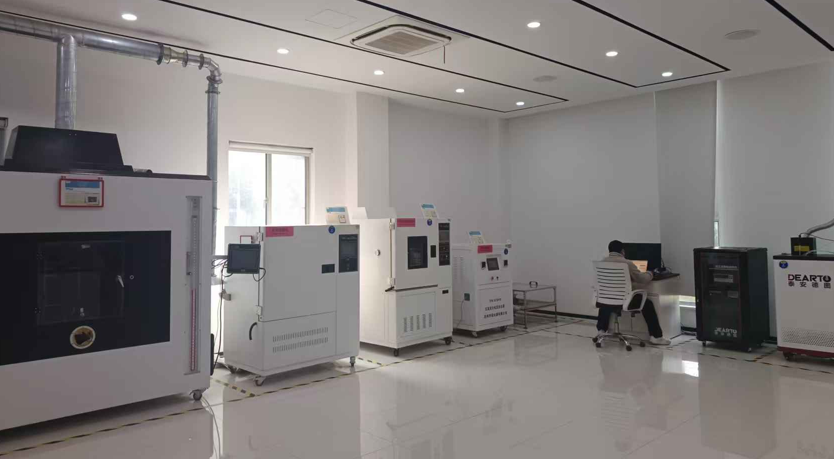
You face constant pressure to deliver reliable products. But a single faulty wire harness1 can cause system failures, leading to costly recalls and damaging your brand's reputation.
As an OEM, you must know about key tests like conductor DC resistance2, insulation durability against heat and oil3, and terminal crimp cross-section analysis4s](https://wireharnessor.com/terminal-crimping-machine/)%%%FOOTNOTE_REF_5%%%. These tests are essential to guarantee a wire harness's conductivity, safety, and long-term reliability6 in demanding automotive or energy storage applications.
A wire harness is more than just a bundle of cables. I like to think of it as the nervous system of your final product. Every signal, every bit of power, flows through it. A failure here is not just a component failure; it's a system failure. For years, my team and I have built our reputation on preventing these failures before they ever leave our factory. But how can you, the procurement manager, be sure every single component is up to the task? It all comes down to a strict, daily testing regimen. Let's break down the essential tests we perform every day to protect your product and your brand.
How Do We Guarantee the Quality of the Wires Themselves?
A wire seems simple, but hidden defects can cause major failures. Under-specced wires can overheat, and weak insulation can crack, leading to short circuits and potential fires.
We guarantee wire quality through a series of critical tests. We check for correct electrical flow using a DC resistance test7. We confirm durability against heat, oil, and fire. We also test the insulation's physical strength8 to ensure it doesn't strip off accidentally during assembly.
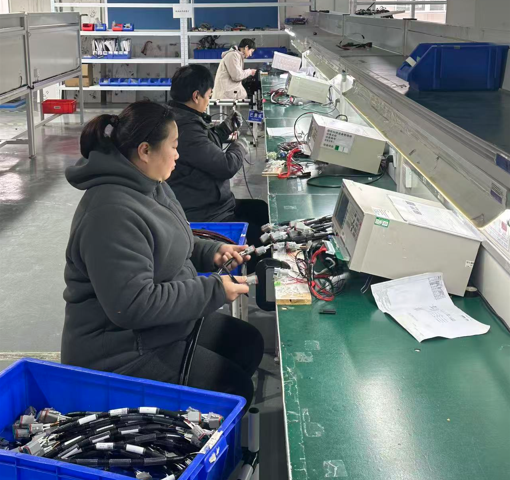
When we source raw materials, we trust but always verify. For auxiliary materials like tape or tubing, we can rely on supplier test reports9. But for the core components—the wires and terminals—we conduct our own in-house testing. It's the only way to be 100% certain. This process is built on three pillars of wire testing.
Conductor DC Resistance Test
This is our first checkpoint. We measure the electrical resistance of the copper conductor. Why is this so important? It directly verifies two things: the purity of the copper and the wire's diameter (or gauge). Some suppliers might try to cut costs by using a slightly thinner wire than specified. This test immediately catches that. A thinner wire has higher resistance, which means it can overheat under load. This simple test prevents a major fire hazard and ensures the wire can carry the current it was designed for.
Insulation and Sheath Durability Tests
The conductor is only half the story. The insulation that protects it is just as critical. We subject the insulation and outer sheath to tests that mimic the harshest real-world conditions. For our automotive clients, this means ensuring the wire can withstand temperatures of 125°C or even 150°C without degrading. It must also resist exposure to engine oil and gearbox oil. We also perform flame retardant tests10. The wire shouldn't just survive; it must be safe.
Insulation Stripping Force11 and Adhesion Test
This test is about ensuring manufacturability and long-term reliability6. During the automated process of building a wire harness, machines strip the insulation to crimp a terminal. If the insulation is too loose, it can pull back, exposing the wire. If it's too bonded, the stripping machine can damage the conductor. We test the force required to strip the insulation to find that perfect balance, ensuring a clean process and a secure final product where the insulation stays put.
| Test Type | Purpose | Why It's Critical for OEMs |
|---|---|---|
| DC Resistance | Verifies conductor gauge and material purity. | Prevents overheating, ensures proper power delivery. |
| Durability (Temp, Oil) | Checks resistance to environmental stress. | Guarantees harness survival in engine bays or storage units. |
| Stripping Force | Ensures insulation adheres correctly for manufacturing and use. | Prevents exposed wires and ensures manufacturing consistency. |
What Makes a Terminal or Connector Truly Reliable?
A loose connection is an invisible threat inside your product. It can cause intermittent faults, overheating, and eventually, total failure. This is incredibly frustrating for your end-users.
A reliable terminal creates a solid, stable connection for the product's entire life. We verify this by testing the force needed to plug and unplug it and by measuring its contact resistance12. A low resistance, under 20mΩ, is crucial to prevent dangerous overheating.
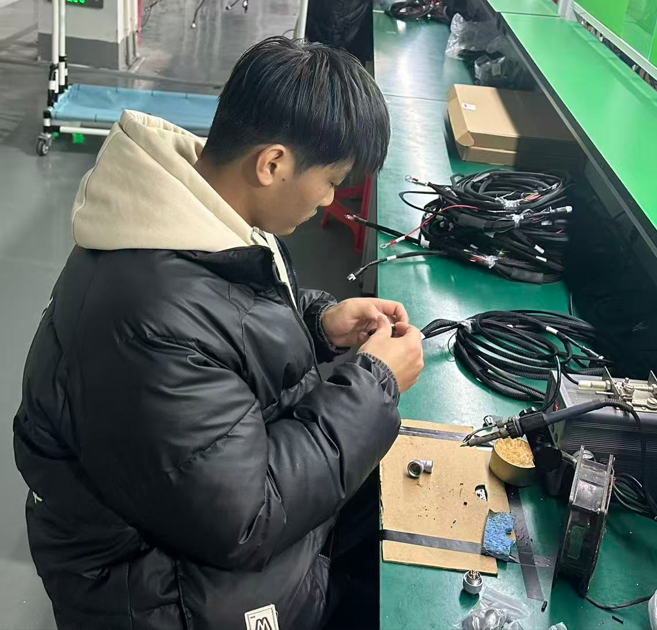
The point where a wire meets a terminal is a common point of failure. All the current flowing through the wire has to pass through this tiny connection point. If that connection isn't perfect, you have a problem. That's why we are obsessed with testing our terminals and connectors. We focus on two key performance indicators that tell us everything we need to know about the connection's quality and longevity.
Mating and Unmating Force Test
Think about a connector. It needs to be easy enough to plug in during assembly, but it must be tight enough to never vibrate loose. This is a delicate balance. We test the force required for the initial connection. Then, we test it again after hundreds or thousands of cycles. This simulates the life of the connector, including potential maintenance. The force must remain within a strict specification. If it's too loose, the connection is not reliable. If it's too tight, it can damage the connector or make assembly difficult. This test ensures a secure fit that lasts.
Contact Resistance Test
This is a core electrical test for any connection. We pass a current through the mated terminal and measure the voltage drop. From this, we calculate the resistance. Our internal standard, and a common industry one, is that this resistance must be less than or equal to 20 milliohms (mΩ). Why so low? Resistance creates heat. A higher resistance means the connection point will get hot under load. This heat can melt the plastic housing, damage surrounding components, and create a serious fire risk. It also means a loss of power or signal integrity. This test is non-negotiable for safety and performance.
| Test Type | Measurement | Why It's Critical for OEMs |
|---|---|---|
| Mating/Unmating Force | The physical force (Newtons) to connect/disconnect. | Ensures a secure physical lock that prevents vibrational failure. |
| Contact Resistance | The electrical resistance (≤20mΩ) across the connection. | Prevents overheating, power loss, and potential fire hazards. |
Why is Crimp Cross-Section Analysis the Most Critical Test of All?
You cannot see a bad crimp with your naked eye. Yet, this tiny, hidden defect is one of the single biggest causes of wire harness failure and costly product recalls.
Crimp analysis is the most critical test because it provides visual proof of a perfect mechanical and electrical connection. We slice the crimp open and examine it under a microscope. This allows us to verify the conductor, terminal, and insulation are perfectly bonded together.

Of all the tests we do, this is the one I consider the most important. It's the moment of truth for a wire harness. The crimp is where the wire and terminal become one. A bad crimp will eventually fail. A good crimp will last the lifetime of the product. The only way to know for sure is to look inside. We use a process called metallographic slicing13. We cut the crimped terminal, encase it in resin, and polish it to a mirror finish. Then we put it under a high-powered microscope.
We are looking for a perfect bond. We check that the terminal barrel has uniformly compressed the copper strands, forming a single, solid mass with no gaps or voids. We verify that the compression is correct. There are two main failure types we are looking for.
- Under-crimped: Not enough force was used. There are gaps between the wire strands. This creates high resistance and a weak connection that can pull apart.
- Over-crimped: Too much force was used. The terminal can cut or fracture the wire strands, making them brittle and prone to breaking from vibration.
We also check the bellmouth shape and the position of the insulation. This analysis gives us a complete picture of the crimp quality. It’s a destructive test, so we do it on samples from every production batch. For me and my team, it's our ultimate seal of quality.
| Crimp Condition | Visual Characteristics (Under Microscope) | Consequence |
|---|---|---|
| Good Crimp | Uniform strand compression, no voids, correct shape. | Strong, reliable, low-resistance connection that lasts a lifetime. |
| Bad Crimp | Gaps between strands (under-crimped14) or fractured strands (over-crimped15). | High resistance, overheating, mechanical failure, eventual breakage. |
Conclusion
Rigorous testing of wires, connectors, and especially the crimp, is not an option. It's our daily commitment to delivering the quality and reliability your brand depends on.
Understanding the impact of a faulty wire harness can help you prevent system failures and protect your brand's reputation. ↩
Learn how DC resistance testing verifies conductor gauge and material purity, preventing overheating and ensuring proper power delivery. ↩
Explore how insulation durability tests ensure wire harness survival in harsh environments, preventing failures and ensuring safety. ↩
Discover how crimp analysis provides visual proof of a perfect mechanical and electrical connection, preventing wire harness failures. ↩
Find out how crimp analysis verifies the bond between wire and terminal, ensuring a strong and reliable connection. ↩
Learn about the essential tests that guarantee the long-term reliability of wire harnesses in demanding applications. ↩
Understand how the DC resistance test checks for correct electrical flow and prevents major fire hazards. ↩
Explore the tests that ensure insulation doesn't strip off accidentally during assembly, maintaining safety and reliability. ↩
Learn how supplier test reports are used alongside in-house testing to ensure the quality of auxiliary materials. ↩
Understand the importance of flame retardant tests in ensuring wire harness safety in case of fire exposure. ↩
Learn how the Insulation Stripping Force test ensures manufacturability and long-term reliability of wire harnesses. ↩
Learn how contact resistance testing prevents overheating, power loss, and potential fire hazards in wire harnesses. ↩
Explore the process of metallographic slicing and how it provides a complete picture of crimp quality. ↩
Understand the risks of under-crimping, including high resistance and weak connections that can lead to failures. ↩
Learn about the dangers of over-crimping, such as fractured strands and mechanical failure, compromising reliability. ↩